
Choosing the right pergola material is not just a design decision. It is a long-term investment in durability, maintenance, and performance. When homeowners compare aluminum vs cedar pergola options, climate quickly becomes the deciding factor. Each material offers distinct advantages, but their lifespan varies significantly depending on weather exposure, upkeep, and installation quality.
This guide breaks down how cedar and aluminum pergolas perform in different environments, helping you make a confident, informed choice for your outdoor space.
Understanding Pergola Longevity
A pergola’s lifespan depends on three primary factors:
- Material composition and resistance to weather
- Installation quality and structural support
- Ongoing maintenance and care
According to industry data from the North American Deck and Railing Association, properly installed pergolas typically last 10 to 30 years depending on material and climate conditions. Understanding how cedar and aluminum react to environmental stressors is essential before committing to either option.
Cedar Pergolas: Natural Beauty with Climate Considerations
Why Homeowners Choose Cedar Pergolas
Cedar has long been favored in landscaping and hardscaping projects for its natural warmth and organic appearance. It blends seamlessly into garden and patio environments, especially in traditional or rustic designs.
Key benefits of cedar pergolas include:
- Natural resistance to insects and decay due to cedar oils
- Lightweight yet structurally strong material
- Customizable through staining, painting, or carving
- Cooler surface temperature in direct sunlight compared to metal
Western Red Cedar, commonly used for pergolas, contains natural preservatives that slow rot and insect damage. This makes it one of the most durable softwoods available for outdoor structures.
How Climate Affects Cedar Pergola Lifespan
Cedar performs best in moderate and dry climates. In these conditions, a well-maintained cedar pergola can last 15 to 25 years.
However, climate challenges include:
- High humidity accelerates moisture absorption and wood movement
- Frequent rain increases the risk of rot if not sealed properly
- Freeze and thaw cycles cause cracking and splitting
- Intense sun exposure leads to fading and surface checking
In coastal or high-rainfall areas, cedar requires more frequent sealing and inspections to prevent premature deterioration.
Maintenance Requirements for Cedar Pergolas
Cedar demands consistent care to reach its full lifespan potential. Best practices include:
- Applying a water-repellent sealant every 1 to 2 years
- Re-staining or painting every 2 to 4 years
- Annual inspections for cracks, rot, or insect activity
- Prompt repair of damaged boards or fasteners
According to the Forest Products Laboratory of the U.S. Department of Agriculture, untreated wood exposed to moisture can lose up to 50 percent of its structural integrity over time. Maintenance directly impacts durability.
Aluminum Pergolas: Engineered for Longevity
Why Aluminum Pergolas Are Gaining Popularity
Aluminum pergolas offer a modern alternative designed to withstand harsh conditions with minimal upkeep. These systems are often powder-coated and engineered for structural consistency.
Primary advantages of aluminum pergolas include:
- Rust-resistant and corrosion-proof material
- Exceptional performance in wet, coastal, or snowy climates
- Minimal maintenance requirements
- Clean, contemporary aesthetic with precise lines
- Compatibility with adjustable louvers and integrated accessories
Aluminum does not warp, crack, or absorb moisture, making it highly reliable in unpredictable environments.
Aluminum Pergola Performance in Different Climates
Aluminum pergolas excel in nearly every climate type. Industry manufacturers often rate aluminum structures for 30 years or more with proper installation.
Climate performance highlights include:
- Coastal regions with salt air cause no corrosion
- High humidity does not affect structural integrity
- Freeze and thaw cycles do not impact the material
- Heavy snow loads are manageable with engineered designs
- Extreme heat does not compromise strength
According to the American Society for Testing and Materials, aluminum alloys used in outdoor structures maintain over 90 percent of their strength after decades of exposure.
Maintenance Needs for Aluminum Pergolas
Aluminum pergolas are virtually maintenance-free compared to wood.
Basic care includes:
- Occasional rinsing with water to remove debris
- Mild soap cleaning once or twice per year
- Visual inspection of fasteners and anchors
There is no need for staining, sealing, or repainting, which significantly reduces long-term ownership costs.
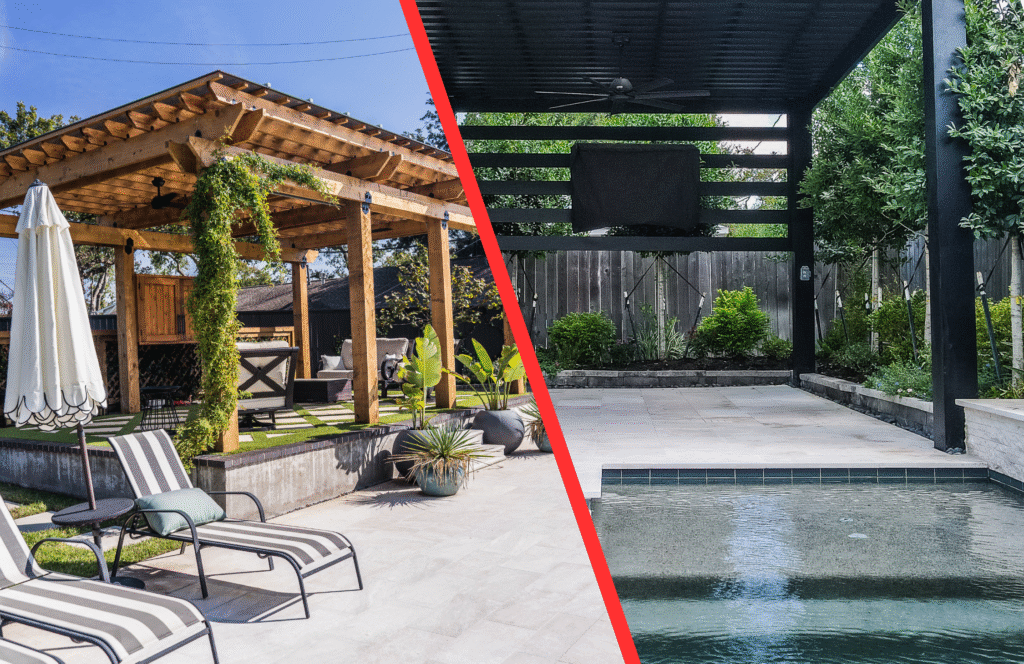
Aluminum vs Cedar Pergola: Side-by-Side Comparison
Durability and Lifespan
- Cedar pergola: 15 to 25 years with consistent maintenance
- Aluminum pergola: 25 to 40 years with minimal upkeep
Climate Compatibility
- Cedar performs best in dry, mild climates
- Aluminum performs well in all climates, including coastal and extreme weather regions
Maintenance Commitment
- Cedar requires ongoing sealing and repairs
- Aluminum requires minimal cleaning only
Aesthetic Appeal
- Cedar offers natural charm and customization
- Aluminum provides a sleek, modern appearance with uniform finishes
Long-Term Cost Considerations
While cedar pergolas often have a lower upfront cost, maintenance expenses add up over time. Aluminum pergolas typically cost more initially but often become more economical over a 20 to 30 year span due to reduced maintenance and replacement needs.
Expert Tips for Choosing the Right Pergola Material
When advising clients on pergola selection, experienced landscapers and hardscape contractors consider these factors:
- Local climate patterns including rainfall, humidity, and snowfall
- Desired maintenance level and long-term ownership expectations
- Architectural style of the home and landscape design
- Budget balance between upfront cost and lifetime value
- HOA or zoning requirements related to structure materials
A professionally installed pergola, regardless of material, will always outperform a poorly installed one. Proper footings, anchoring, and load calculations are critical for longevity.
Read more : Pergolas vs Gazebos: What’s the Difference and Which Should You Choose?
Invest in a Pergola That Matches Your Lifestyle and Climate
Selecting between aluminum and cedar pergolas comes down to durability, maintenance, and aesthetic goals. Aluminum delivers exceptional longevity, standing up to moisture, heat, and changing weather with little upkeep. Cedar offers timeless appeal and customization but requires consistent maintenance to preserve its beauty. Homeowners in demanding climates often benefit most from aluminum’s resilience. Your climate, lifestyle, and design vision should guide the final decision. A well-chosen pergola enhances comfort, shade, and outdoor enjoyment.
Working with professionals ensures your pergola material and design are chosen correctly. Expert installation maximizes lifespan and performance. Reach out to Texan Landscape Group to design a pergola built for lasting value.